
Phishing is one of the most common threats that companies worldwide must face.
According to a report prepared by Proofpoint, as many as 71% of surveyed organizations experienced at least one successful phishing attack. Moreover, the cost of a single attack can reach up to hundreds of thousands, taking into account financial and reputational losses, and the time for a response.
What is phishing?
Phishing is a modern form of fraud that involves extracting confidential data by cybercriminals pretending to be someone they are not. The main goal of phishing is to use social engineering techniques to manipulate the victim in such a way that they voluntarily take action that allows criminals access to systems or accounts.
Considering the ubiquitous haste, overstimulation, and lack of time to verify information, phishing techniques are very common and constantly improved. Even a momentary invocation of trust, fear, or time pressure is enough to significantly expose both our organizations and ourselves to losses. The most frequently used techniques include:
- Fake emails – messages resembling correspondence from banks, offices, service providers, or co-workers, containing links to spoofed websites or dangerous attachments
- Websites – sites imitating popular pages, designed so that at first glance they do not differ from the original ones
- SMS messages or calls – content through which cybercriminals ask to click a link, call back, or provide data
Phishing vs. threats awareness - the foundation of cyber resilience
The foundation of protection against phishing is the threat awareness of every single employee. Even the most technologically advanced security measures will not help if people continue to open suspicious attachments or click on links leading to fake login pages. Building cyber hygiene – a set of best practices and habits for the conscious and skillful use of technology – should be a key task for every IT leader. Unfortunately, due to the rush of duties, this task is consistently given too low a priority.
Present times offer a wide palette of ready-made solutions that support the implementation of cyber hygiene and awareness building. Among the most effective, we can include:
- Up-to-date security standards – Clearly defined guidelines specifying what actions should be taken to maintain organizational security.
- Training programs – Educating employees on phishing risks and preventive measures from the outset.
- Behavior monitoring systems – Identifying individuals who bypass security measures or resist changes, not to punish them, but to understand their reasons and implement corrective actions.
- Technological solutions – Including password managers, which not only secure login credentials but also streamline team collaboration.
Password managers as a protective shield
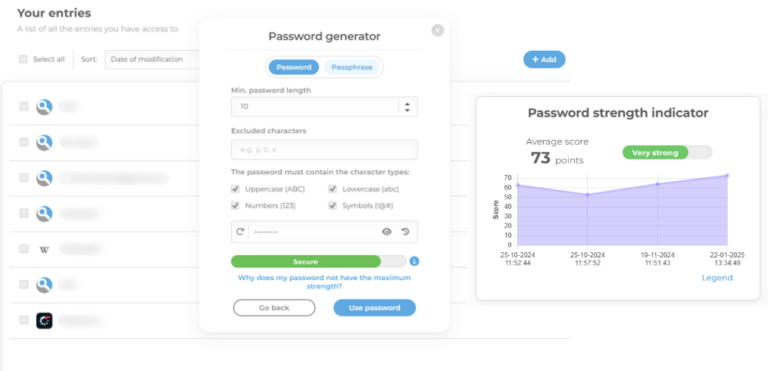
A password manager is an often-overlooked tool in phishing defense. While it does not eliminate phishing directly, its proper use can significantly reduce the risk of successful attacks and mitigate their potential consequences.
According to the report “Cyberportrait of Polish Business”, nearly 29% of users reuse passwords across multiple platforms, meaning that if one credential is compromised, attackers gain access to multiple accounts, including corporate ones. The perc.pass password manager eliminates this risk by generating unique, strong passwords and securely storing them while enabling secure password sharing within an organization.
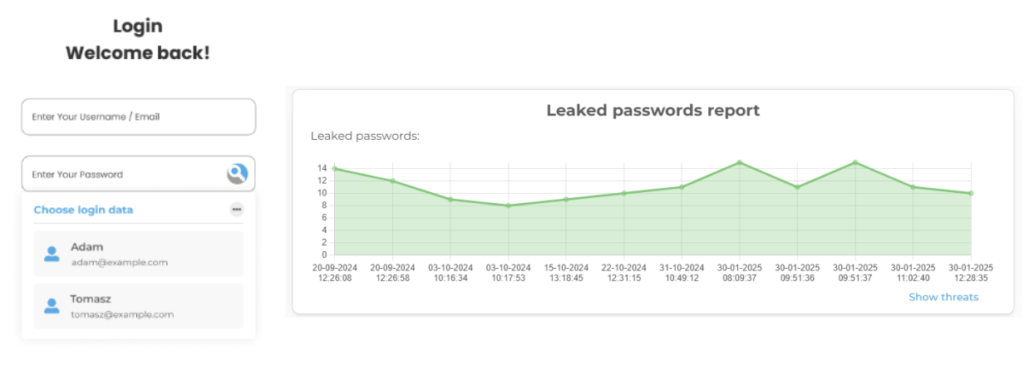
Another key advantage of perc.pass is its ability to detect suspicious websites. The manager will never autofill login credentials on an unrecognized site, prompting users to carefully examine the URL for potential phishing attempts.
Additionally, users can check whether their credentials have been exposed in known data breaches. If a password appears in a compromised database, it should be changed immediately to prevent unauthorized access.
A comprehensive approach to protection
Phishing is a rapidly evolving threat that requires a multi-layered defense strategy. Combining employee education, security tools like password managers, and regular security audits is the most effective way to minimize risks.
In a world where cybercriminals continuously refine their tactics, awareness and the right tools are the keys to security – both for small businesses and large enterprises.